Running until 10 May 2026
A new exhibition at Tate Modern offers an extensive look at the Nigerian artscape starting from the country’s colonial past into the present day and via 1960, its year of independence. Tracing the fascinating ways in which indigenous traditions overlap with global modernist approaches, Nigerian Modernism becomes a narrative of a nation’s identity as well as a mesmerising display of art.
The title does not a describe a unified movement but rather a collection of impressions and reactions to Nigeria’s changing face. Early works show a colonial influence marked by a clear inclination towards realism, but over time, abstract African motifs begin to emerge more boldly and blend with modernist trends. Thus, new independent styles take shape, marking the establishment of a newly found creative freedom.
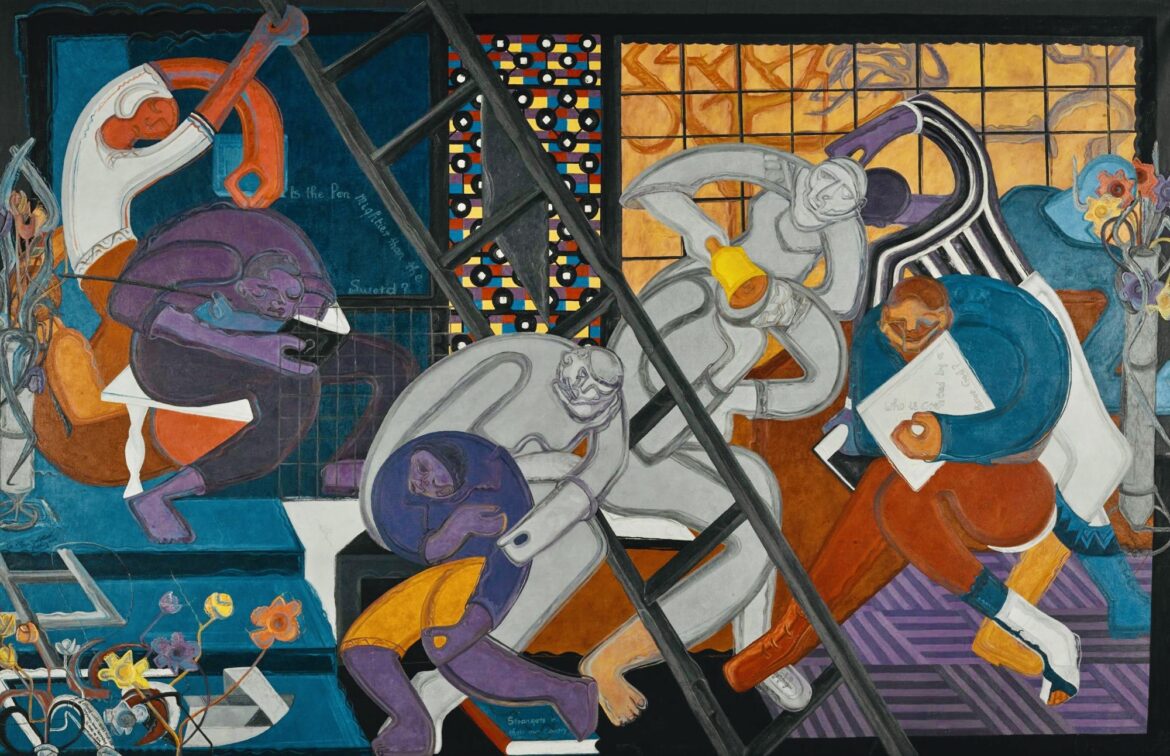
Paintings like Uzo Egonu’s Women in Grief (1968), Stateless People (1981) or Will Knowledge Safeguard Freedom (1985, see cover image) embody this metamorphosis perfectly, as they carry signs of tradition while leaning towards a contemporary style. Egonu explores the complexity of the diasporic experience, a common theme among his contemporaries. Many of the participating artists place stories of displacement and a vanishing national identity at the centre of their works, using art as a means of retaining a collective memory. While the marks of a western education is evident in many cases, the artists’ chosen methods and tools are sometimes influenced by Pan-Africanism, and at other times quite distinctly local.
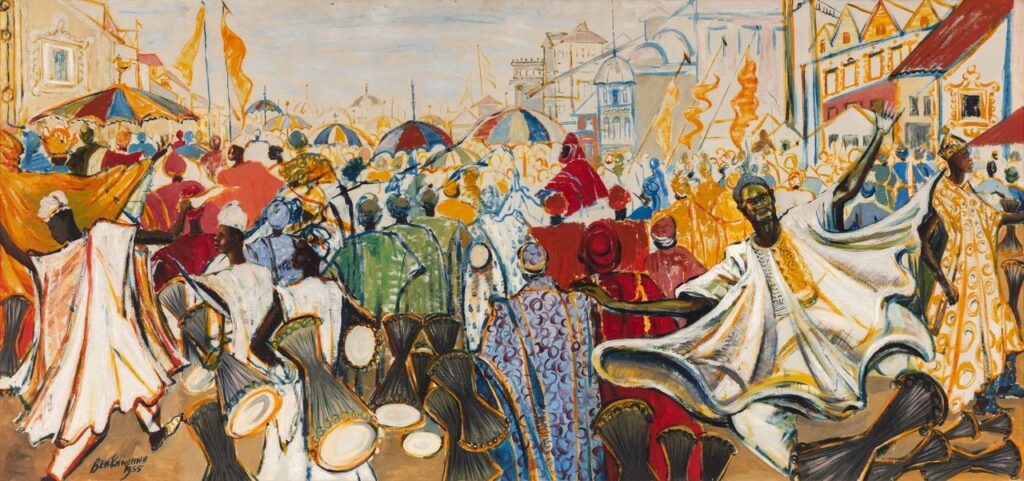
Ben Enwonwu, often regarded as the first African modernist to gain notoriety internationally, captures the energy of movement and ritual to show a ‘spiritual likeness’ as he calls it, rather than descriptive portraits. The Dancer (1968) depicts a figure with a traditional costume bearing intricate patterns all over, while The Durbar of Eid-ul-Fitr (1955) shows a street parade on a Muslim feast day. Both show spirituality expressed through colour and physical practices, drawing attention to the aesthetics of traditional rituals while reminding us of the cultural value beyond the visual spectacle.
A rich and enriching celebration of Nigeria’s art scene, Nigerian Modernism is a revelation in that it uncovers a decades’ long collective journey of cultural affirmation and decolonisation.
For more information or to book, visit the Tate Modern website here.
Main Image: Uzo Egonu, Will Knowledge Safeguard Freedom 2, 1985 © Estate of Uzo Egonu. Tiana and Vikram Chellaram.
— Mersa Auda