
ITALY, 2025.
RELEASE DATE: 15 January 2026 (Italy); 20 March 2026 (UK).
The latest collaboration between director Paolo Sorrentino and leading actor Toni Servillo is the story of a (fictional) Italian president in the final phase of his term who finds himself reassessing his identity, confronting his limitations and coming to terms with how others see him. Melancholic and sophisticated, La Grazia features Sorrentino’s distinctive visual language, catchy music and quirky touches.
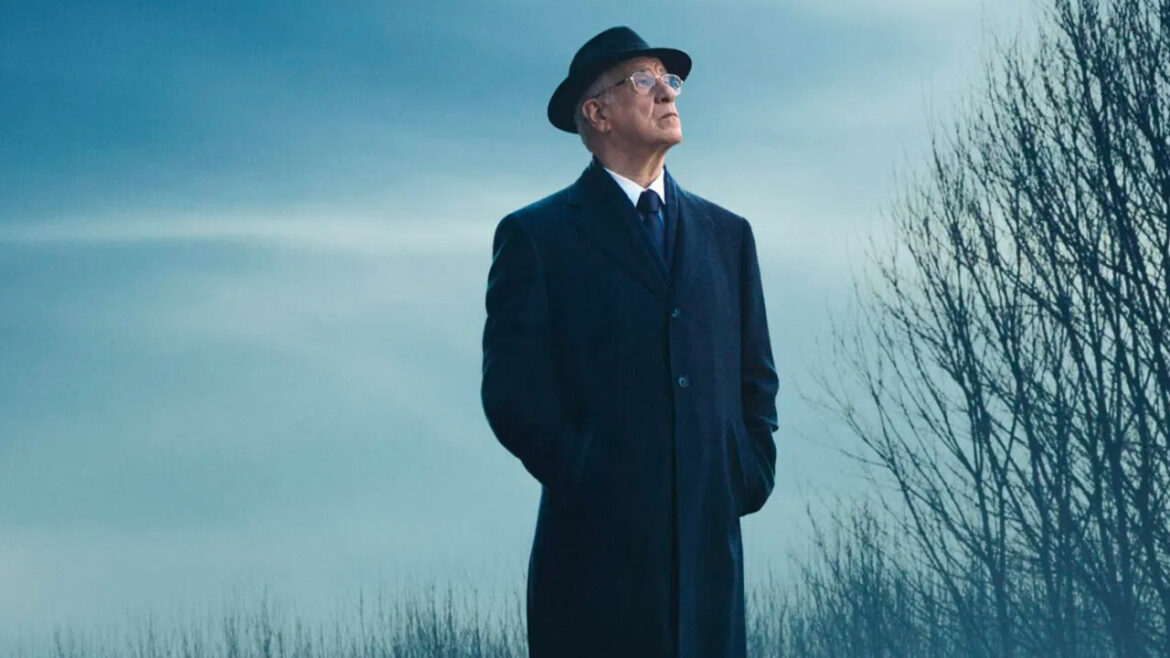
Behind the solemn, composed figure of head-of-state Mariano De Santis (Servillo) there hides an unexpectedly restless mind. A widower who frequently reminisces about his departed wife, he is maddened by an unresolved episode of their distant past that he obsesses over with adolescent fervour. He is renowned for his extraordinary legal expertise, but also secretly nurtures a passion for rap music. In spite of his professionalism and commitment to his role, he’s eager to retire and he hopes to pass his remaining days in office as unremarkably as possible. Those around him, however, admonish him for his evasiveness and refuse to let him sit on the fence forever. His daughter and advisor Dorotea (Anna Ferzetti) puts pressure on him to wrap up two sensitive cases that involve pardoning convicted killers and to sign a pro-euthanasia legislation that he struggles to make up his mind about.
La Grazia invites the audience into the intimate sphere of a politician’s world and reveals raw vulnerability beneath the formalities. It is a sharp character study of a figure of authority but also of a man coming face to face with third age. The protagonist deals with the weight of maintaining a spotless reputation, and he does so by leaning on neutrality and cautiousness. As his career comes to an end, however, he inevitably evaluates his personal life too, seemingly for the first time. His principal doubt is this: how much of his own true self emerged as he tried to meet expectations? Did he own his life?
As these profound reflections hang in the air, Sorrentino and cinematographer Daria D’Antonio ensure that viewers are treated on a visual level as well. Smooth aesthetics go hand in hand with the melancholy mood. The scenes are decidedly less flamboyant than the director’s previous work, but equally striking in their crafted compositions, their play with symmetry, and the artful alternation of wide shots and close-ups.
As with all of Sorrentino’s films, the soundtrack is another key element. Music is not merely a mood setter but it reveals something of the central character’s psyche. De Santis’ love of rap, for instance, may seem humorous outwardly but it’s actually symbolic: it represents an authentic part of himself, one that only emerges in secret because it doesn’t fit the rest of the picture. He eventually acknowledges this incongruent pleasure through a public gesture that could be read as acceptance of his unfiltered self.
La Grazia is a meditation on endings, on getting closure, on moral reckonings and on the legacy one leaves behind. It zooms in on a stage in life in which it becomes evident (especially within the frame of a political context) that worldly matters are inevitably perceived as a direct reflection of one’s values, and that any action, or inaction, becomes therefore a badge of identity.
The Immersive Verdict: Melancholic and sophisticated, La Grazia features Sorrentino’s distinctive visual language, catchy music and quirky touches. It’s a sharp character study mixing profound reflections with smooth aesthetics.
— Mersa Auda