16 June – 23 August 2026
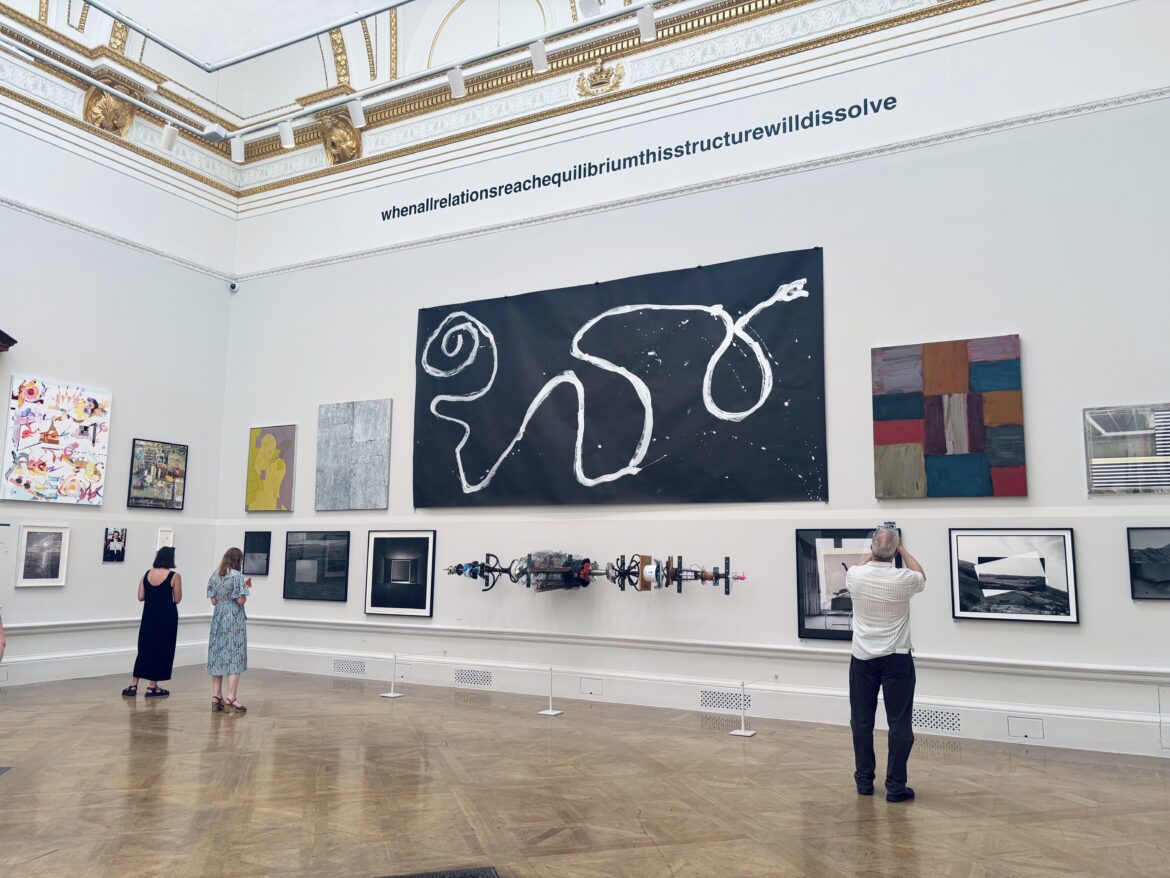
The world’s longest running art event in the cultural calendar has come around once again to pique, inspire and intrigue curious visitors and eager art collectors. Now in its 258th edition (the first was held in 1769), the RA’s Summer Exhibition keeps things fresh and vibrant thanks to its open-submission format that sees established names, emerging artists and even amateurs displayed side by side. With roughly 1800 pieces on show (selected from around 18,000 submissions), it is inevitable to feel overwhelmed upon entering the first room and being met with more than the eye, and mind, can take.
This year’s co-ordinator is British sculptor and Royal Academician Ryan Gander, who has chosen ‘Interconnectedness’ as the curatorial theme. The idea of having a theme is an attempt to create cohesion, but it only ties everything together in a vague sense: there is no obvious intention to represent interconnectedness in the works displayed. It’s rather used, it seems, as an umbrella term for representing a diversity of ideas and identities that get to coexist through artistic expression.
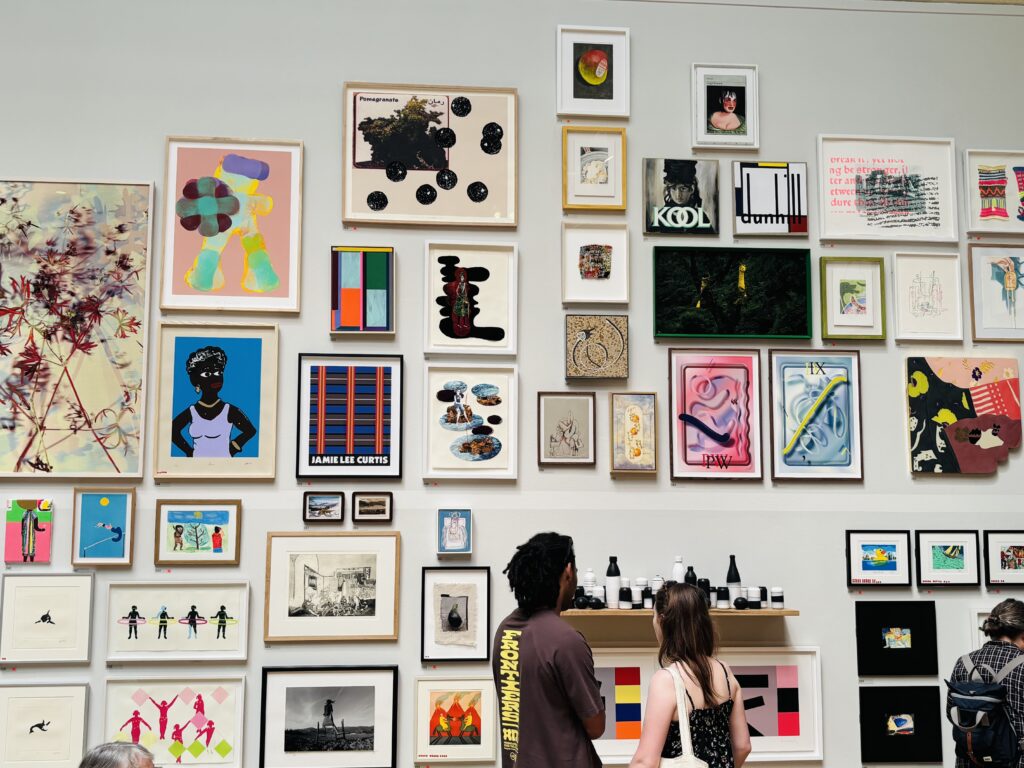
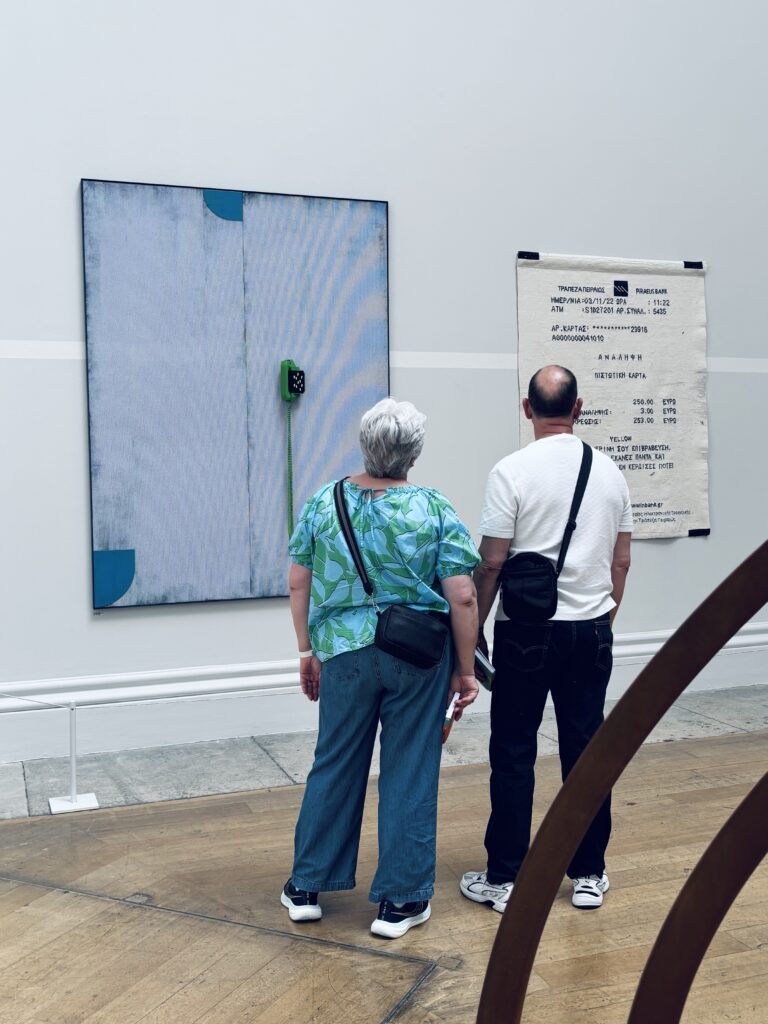
As one moves through the crowded rooms and tries to focus on countless paintings of different sizes, styles and themes (with sometimes mere inches of blank wall space separating them) it is nigh impossible to enter a contemplative mood. The fact that the exhibited works are on sale means that the atmosphere is more buzzing than meditative. Visitors can be seen consulting the catalogue to check the prices or overheard discussing the suitability of a painting for their home or just generally being more vocal and direct about their opinions. In short, it requires some time and effort to single out individual works and connect with them.
Since there is no particular order to follow, it becomes natural to let oneself be pulled by the most compelling works, which will of course be dictated by personal taste. You can expect to find portraits, landscapes, sculpture, photography, architecture and more besides. Some sections are arranged according to colour, grouped by shades of green or hues of pink, forming harmonious bundles that please the eye. The different layouts reflect the vision of the various curators who participated in setting up the exhibition.
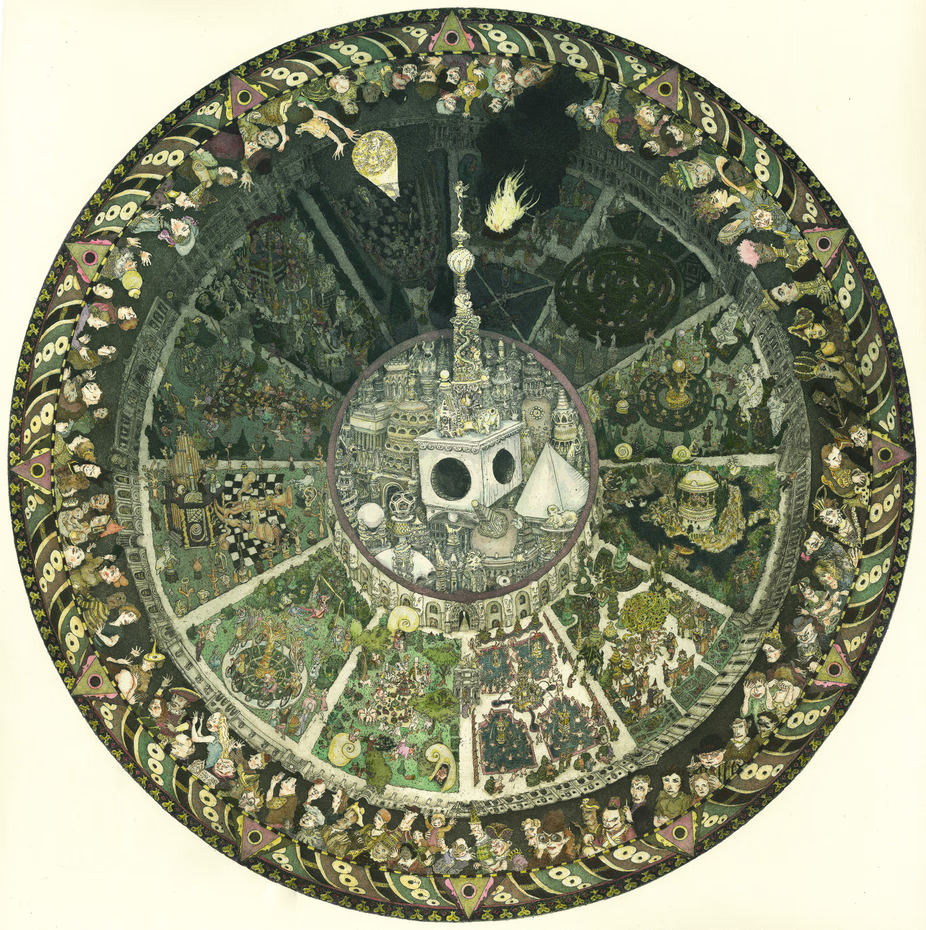
One of the first works to catch our attention can be spotted almost immediately upon entering the first room. Robert Powell’s The Clock is a mesmerising piece with medieval influences and a touch of the Bosch-esque. It uses the idea of timekeeping through iconography rather than numerical sequences, and each hour segment shows highly detailed scenes in a storyboard format. Tiny figures engage in various curious activities as day morphs into night: one could spend a long time exploring all the surreal, intriguing settings created by Powell. It’s truly magnetic and impressive.
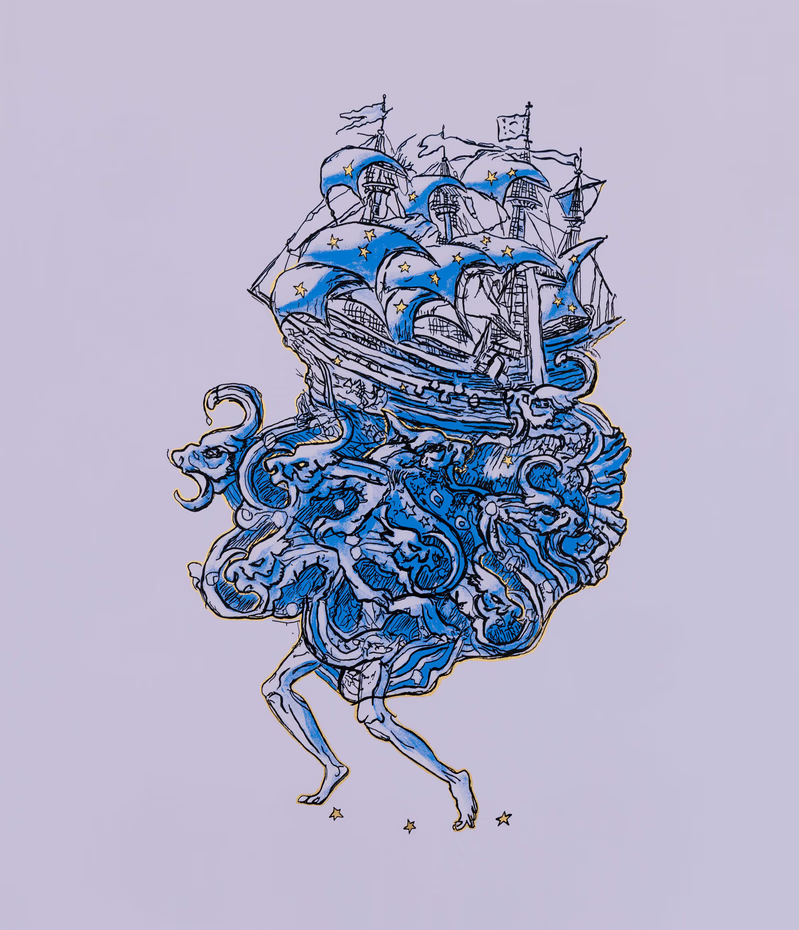
Hew Locke’s Kings & Queens series is impossible to ignore. There are six screenprints displayed (from a suite of 15), each with a carnivalesque figure standing against a boldly coloured background. Placed side by side, they seem to form a procession. The features and qualities of myths, monarchs and deities are merged together to form fantastical characters. They seem to convey the multifaceted identities of the Caribbean diaspora and the complex meeting between oppression, empowerment and celebration.
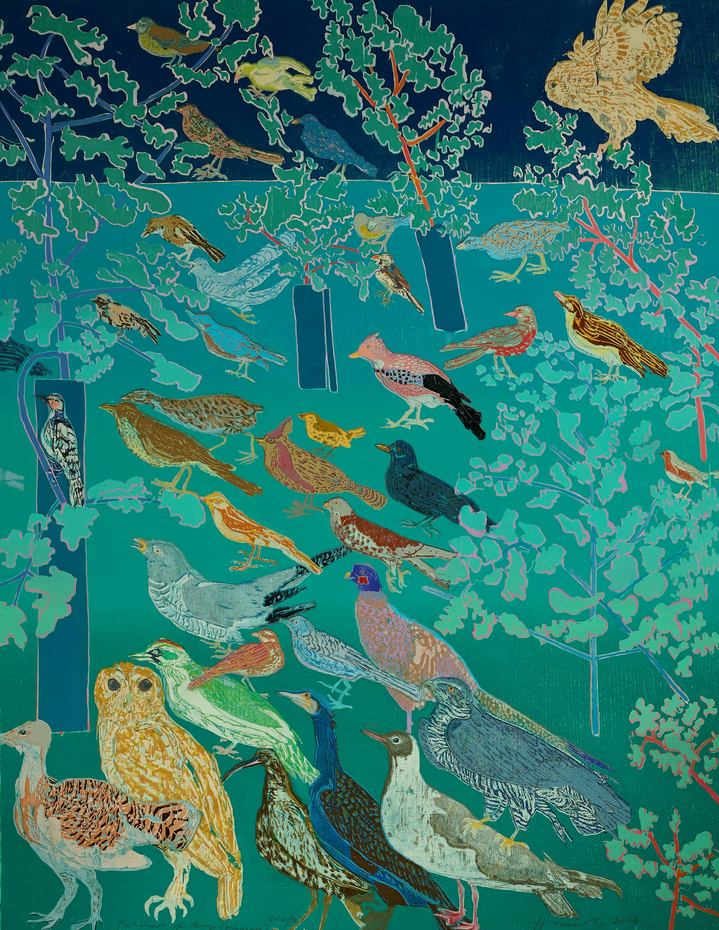
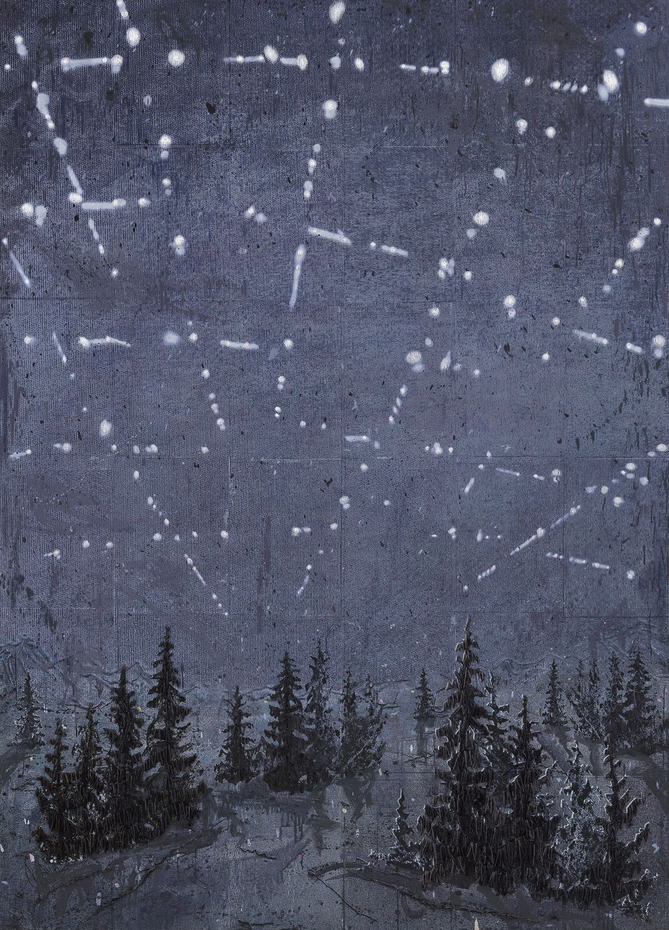
Another striking piece is Tom Hammick’s Parliament of Beings, which takes inspiration from Giotto’s painting of St Francis of Assisi giving a sermon to the birds. It’s an ode to wildlife creatures, which he portrays in an ethereal space made up of vibrant shades of blue and violet, accentuating their beauty and diversity. The painting hints at the interrupted conversation between humans and the other inhabitants of the natural world. Michael Raedecker explores similar tensions in Wild, where a winter landscape asserts its power and appears to expand. Using his signature mixed-media method, he blends traditional painting techniques with textural embroidery to create an arresting, dramatic work.
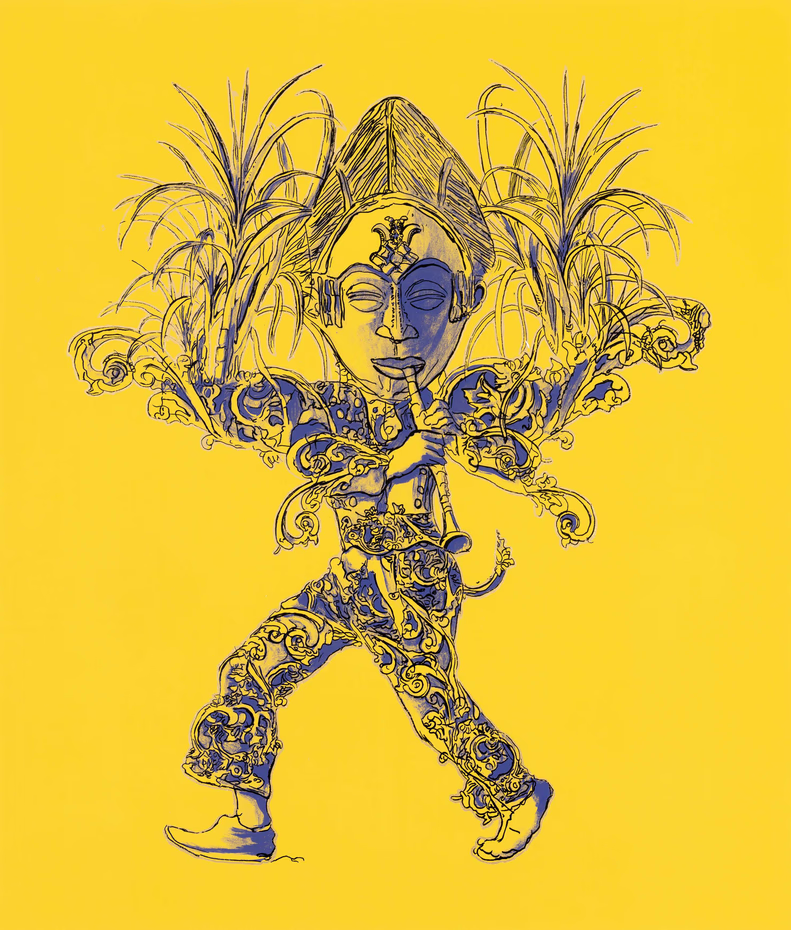
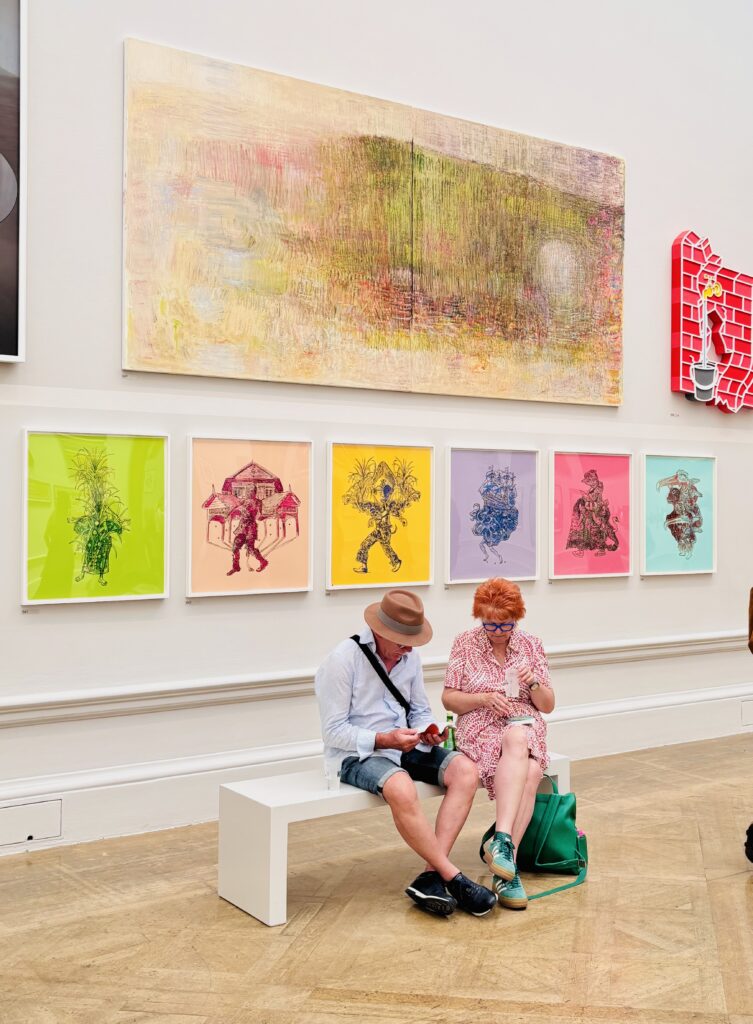
Photo Credit: Mersa Auda.
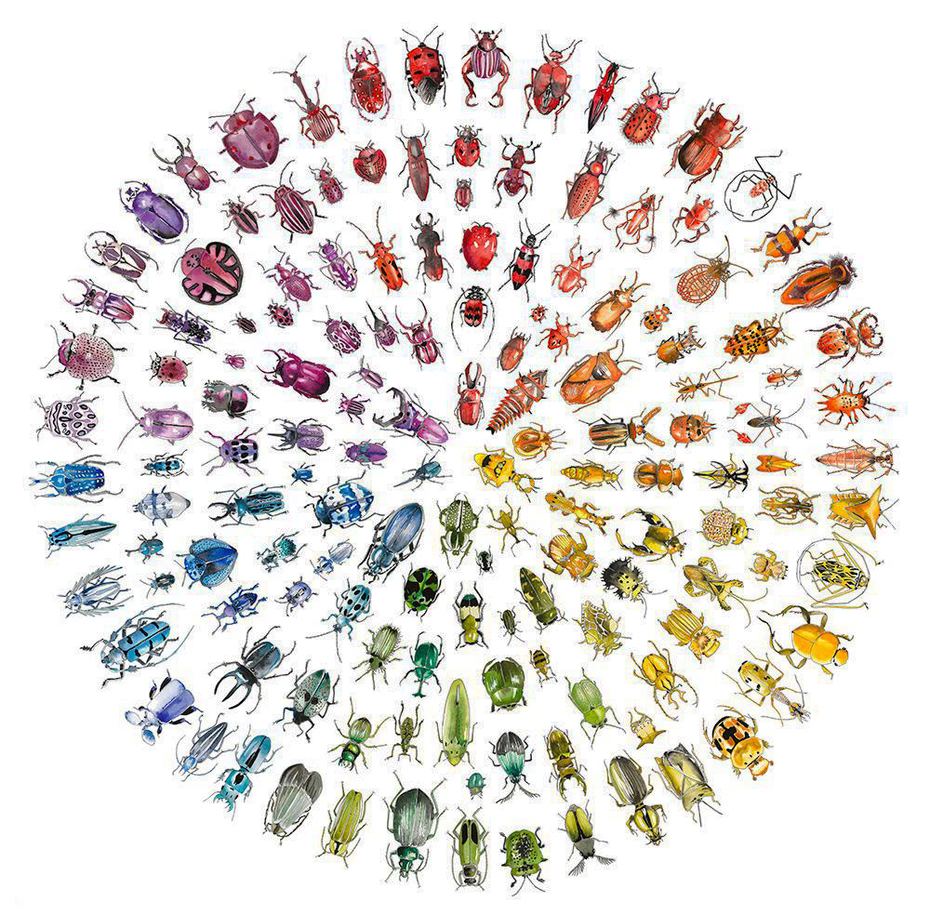
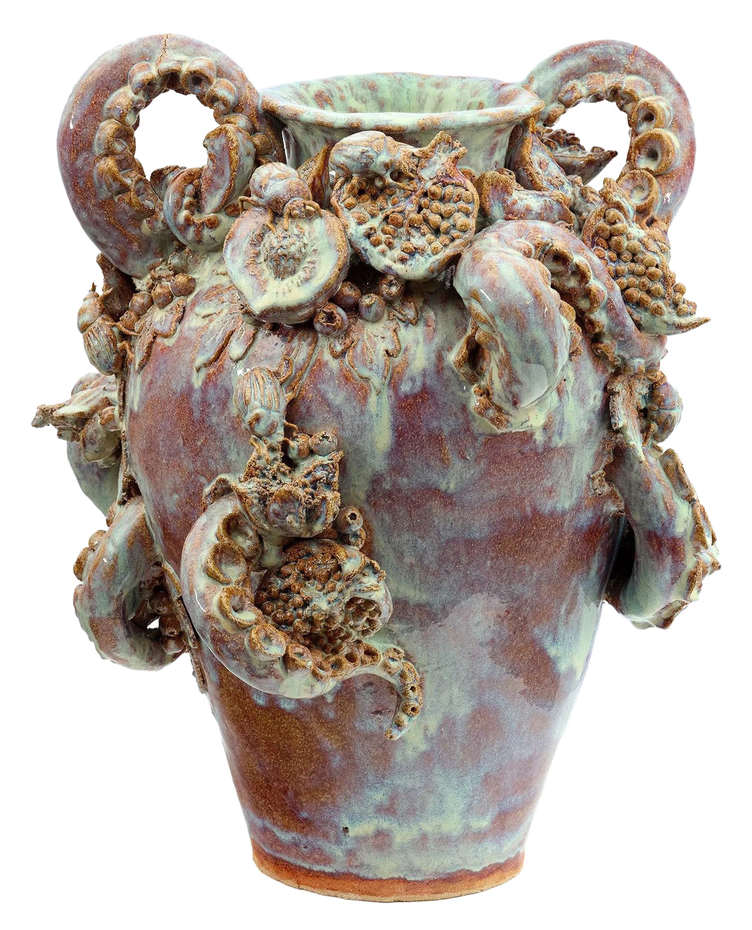
Then there’s the Beetle Colour Wheel by Jim Moir (a.k.a. Vic Reeves), a cool and intricate piece featuring 147 bugs arranged in a chromatic wheel. Beyond canvases, Lindsey Mendick’s I’ll Sleep When I’m Dead and The Ripest Fruit are two beautiful pieces of ceramic sculpture. There’s something visceral in the symbolism and sensual in their forms. A sense of richness, of abundance and movement makes them feel dynamic and alive.
Depending on one’s intentions and inclinations, the Summer Exhibition can either be a more exciting and purposeful experience than the usual art show, or it can feel like an overly cluttered bazaar of disjointed ideas. Very often however, there will be at least a handful of art works that win one over, making the visit worthwhile.
For more information or to book, visit the Royal Academy website here.

Photo Credit: Mersa Auda.
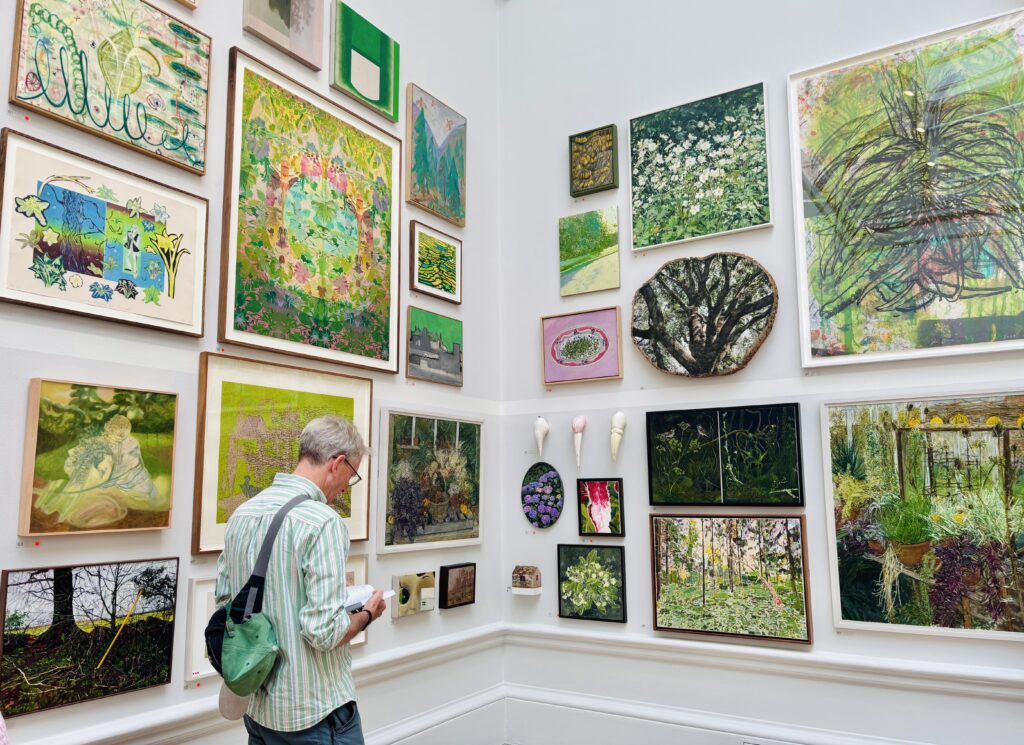
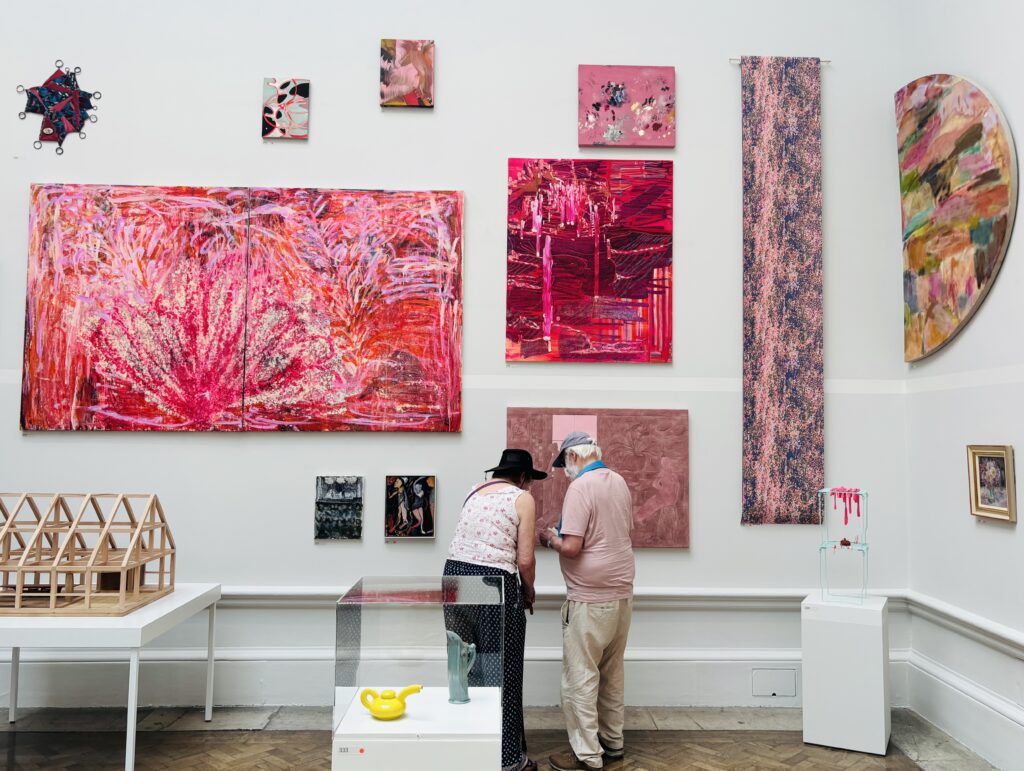
Photo Credit: Mersa Auda.

— Mersa Auda