
Sep 2023- Jan 2024
The curators at the beautiful former royal residence Venaria Reale in Turin posed the question: what does it really mean to ‘eat like a king’? The answer came in the form of an extensive exhibition dedicated to the dining tables of Italian courts between the 16th and 19th centuries.
Very little is known about the private daily meals of kings and queens of the past, and there are limited historical records of what was consumed at royal banquets, but the visual depictions that do exist open up fascinating insights into this world. In the public context, food played a key role as it was used to show off wealth and confirm status. Impressive centrepieces, as well as porcelain and crystal tableware contributed to flaunt the luxury that sovereigns enjoyed. Furthermore, access to these formal gatherings and the seating arrangement could reveal the power hierarchies in place.
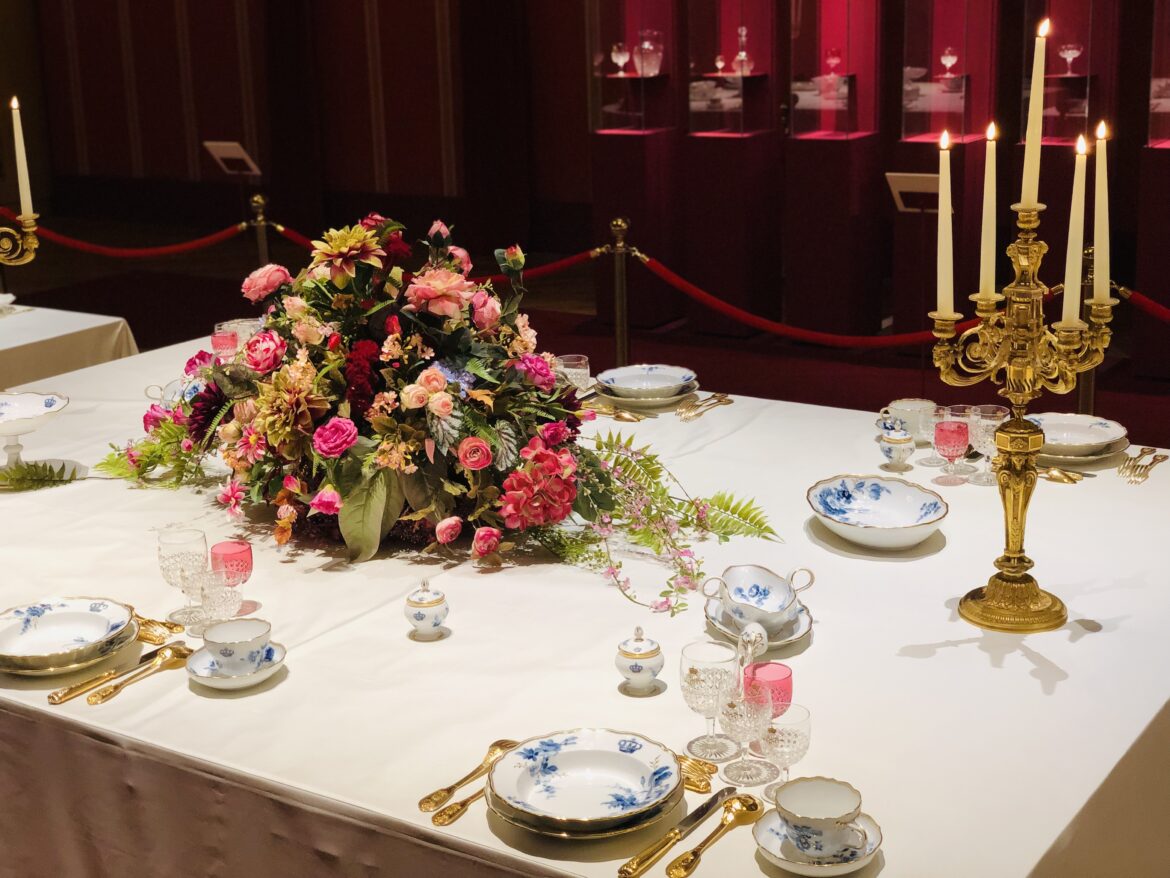
A number of paintings show sumptuous spreads on long tables, which are sometimes accurate depictions and at other times idealised images intended to boost, or maintain, a ruler’s reputation. There are also surviving sets of tableware on display, and recreations of what a table set up, or mise en place, would have looked like. One interesting exhibit is a treatise from the Renaissance period named “Banquets, Arrangement of Food and Settings in General” by a court official named Cristoforo di Messisbugo, which is essentially a collection of the dietary practices of 16th century Italian rulers.
A fascinating 18th century painting by Gaspare Diziani depicts the royal table on one side and the court kitchen on the other, a thin wall dividing them. The dining room exudes solemnity, coolness and stillness, while the kitchen features the domestic staff bustling around an open fire, roasting birds, handling pots and visibly working at a fast pace. Beyond classical paintings, with the spread of printed material and the press came the use of caricatures. Sovereigns were often targeted and a frequent way to mock them was through their eating habits, which became a metaphor for excessive power and a tangible example of how far detached they are from common people.
In the 19th century, the royal table saw a few changes. Lavish banquets became less frequent and were mainly reserved for weddings and important events such as coronations. Court frequenters also became more mixed and now included politicians, businessmen and the like. Another novelty was the introduction of the menu. Deriving from the word minuta (French via Latin), it indicated a small list. Up until that time, the common way to serve food was by bringing everything at the table all at once, which is known as the ‘French-style’ service. This was replaced by the ‘Russian-style’, which involves following a list of courses put together by the butler or cook, presenting a printed card (or a booklet for evening meals) that preannounced the dishes, and then bringing the plates in one by one. This new approach was later adopted by hoteliers and continued to gain popularity until it became widespread.
A window into the fascinating world of royal banquets in Italy, Monarchs at the Table demonstrates how the simple act of eating can reveal a trove of precious historical details to marvel at.

Painting by Pietro Longhi (1755).

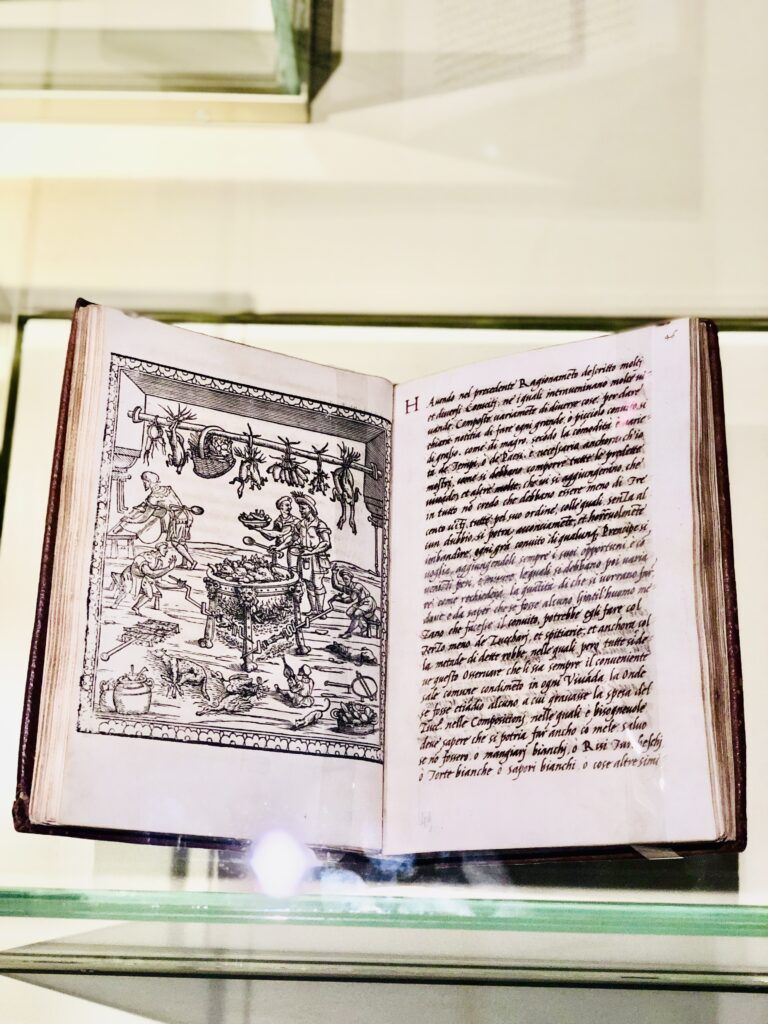

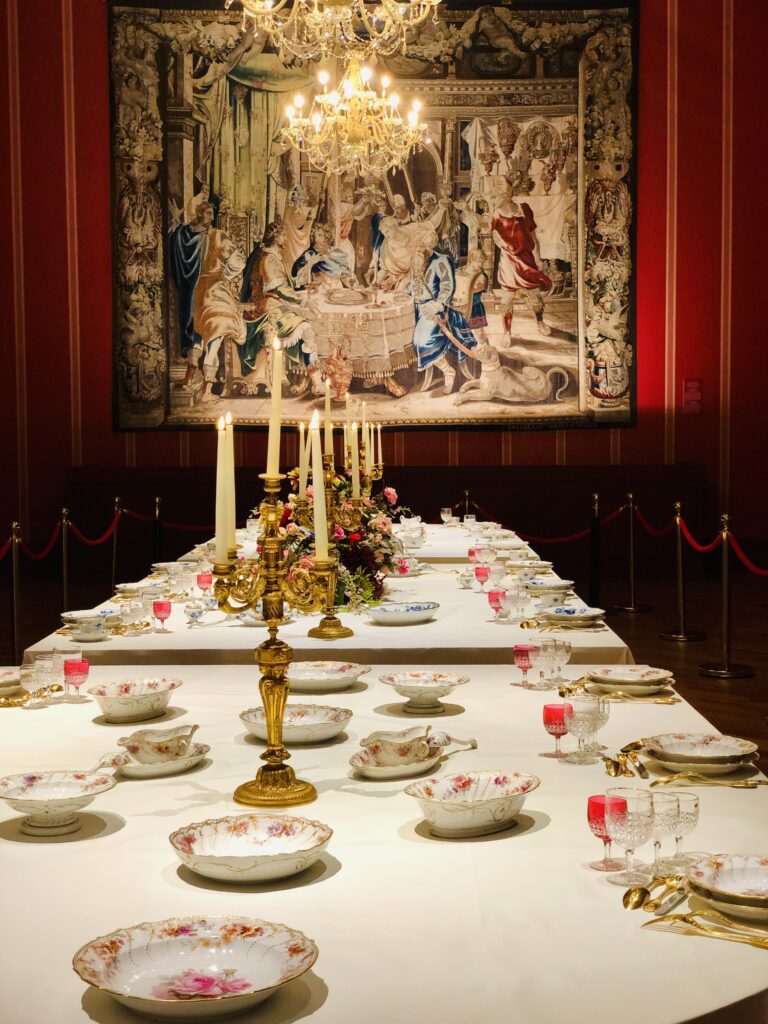
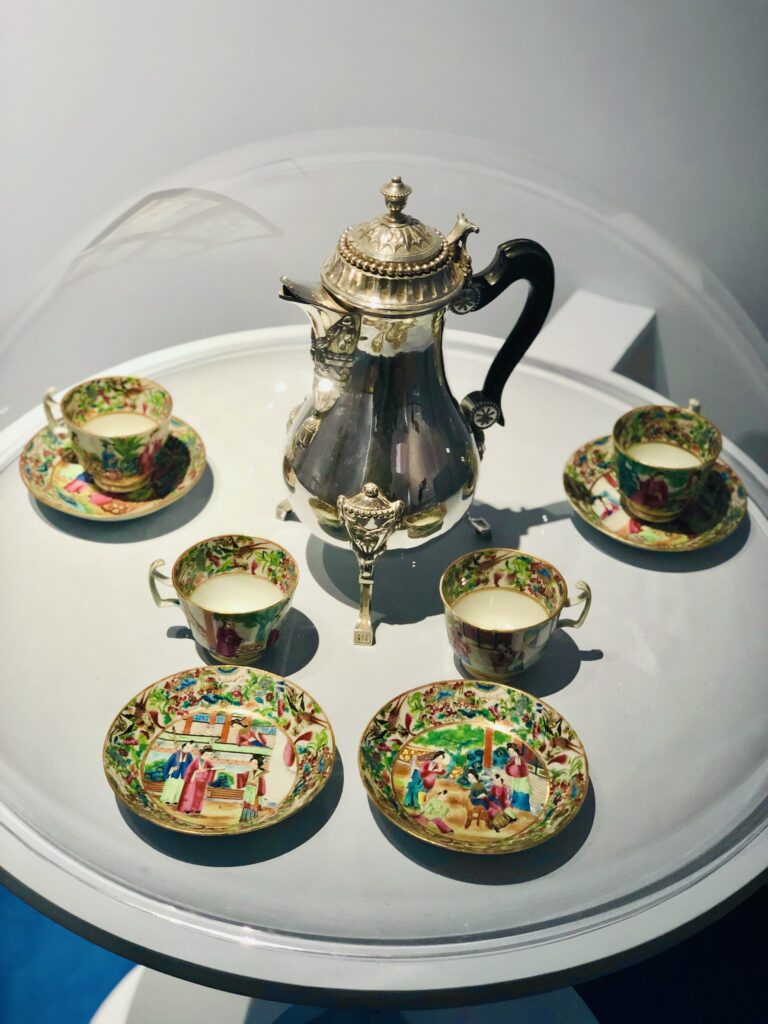


Photo Credit: Mersa Auda.
— Mersa Auda